Snake gaiter testing can provide useful information about protective materials, but a phrase such as “puncture tested” needs context. Before treating it as reassurance, find out what was tested, which method was used, and what the result actually describes.
You do not need to become a laboratory specialist to ask better questions. This guide explains how to read common testing claims, separate material evidence from product coverage, and decide what information you still need before buying.
Start with the claim, not the badge
Product listings often compress technical information into a few words. “Tested,” “certified,” and “snake proof” may look equally reassuring, but they should lead to different questions.
- “Tested”: what test was performed, and what was the result?
- “Certified”: which certification scheme applies, and what does the certificate cover?
- “Snake proof”: what evidence and limitations support that description?
A laboratory name or standard number is a starting point for checking the claim. It does not replace an explanation of the product, the tested sample, and the intended use.
For the broader purchase decision, our guide to how to choose snake gaiters covers sizing, construction, comfort, and other practical considerations.
What ASTM F1342 tells you about puncture resistance
ASTM F1342/F1342M describes a method for measuring the force needed for a specified probe to penetrate a protective-clothing material sample. Its published scope includes different testing protocols.
The method evaluates a defined puncture setup; ASTM explicitly states that it does not cover every type of puncture. For a buyer, the important implication is that a reference to F1342 alone does not establish performance against every snake bite or every situation outdoors.
A documented result can still be useful. Read it as evidence about the tested material under the stated conditions, with a clear boundary around what it demonstrates.
Why snake gaiter testing results need context
Not every puncture test uses the same type of probe. For example, ASTM F2878 addresses penetration by specified hypodermic needles. Its published description also explains that it does not simulate all conditions of use.
These methods illustrate why “puncture resistance” is not a complete description of a test. A needle-based method is not automatically a snake-bite simulation, and two results should not be treated as directly comparable simply because both report force.
Before comparing numbers, check whether the methods, sample constructions, conditions, and units match. If they do not, ask the manufacturer or testing laboratory to explain what comparison is appropriate.
Five questions to ask about a test report
A useful request is specific enough that the seller can answer it without guessing what you mean. Start with these questions:
| Question | What to clarify |
|---|---|
| Which product does the report identify? | Confirm that the model or construction corresponds to the gaiters currently being sold. |
| What exactly was submitted for testing? | Distinguish a fabric sample, a layered assembly, and a finished garment. |
| Which method and version were used? | Ask for the test designation and any relevant protocol or deviations. |
| What result was recorded? | Look for a result with units and context, rather than the word “passed” alone. |
| What does the manufacturer claim from that result? | Ask how the evidence relates to the advertised protection and its limitations. |
You can phrase the request simply: “Could you share the testing information for this model and explain which materials or components were evaluated?”
If a report contains details you cannot interpret, request a plain-English explanation. An unanswered question is a reason to seek clarification, not a reason to invent a conclusion about the product.
A material sample and a wearable product answer different questions
Evidence about a tested material does not automatically tell you whether every closure, seam, overlap, or edge was evaluated. Ask which parts of the finished design the evidence covers.
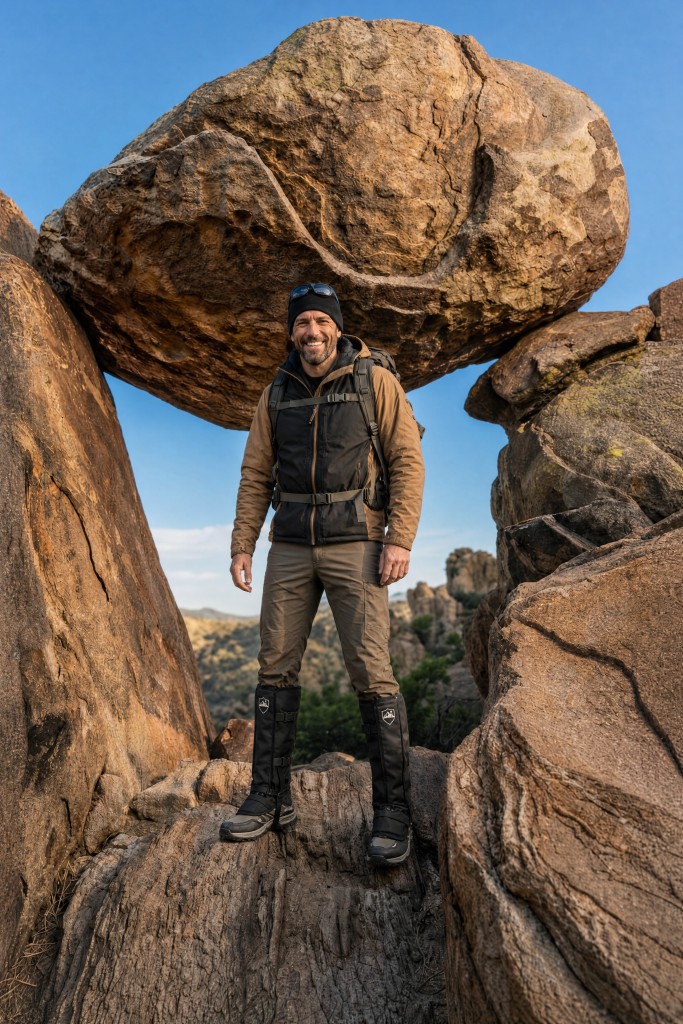
Imagine a listing that shows a material result beside a photograph of the complete gaiter. The photograph helps you understand the product’s appearance. It does not, by itself, establish that the entire assembled garment underwent the same evaluation.
This is why coverage information deserves its own check. Look at where the gaiter ends, how it meets the boot, and which areas the manufacturer says remain exposed.
If you are comparing separate gaiters with integrated footwear, our snake gaiters versus snake boots comparison explains the practical differences between those formats.
Keep fit checks separate from protection tests
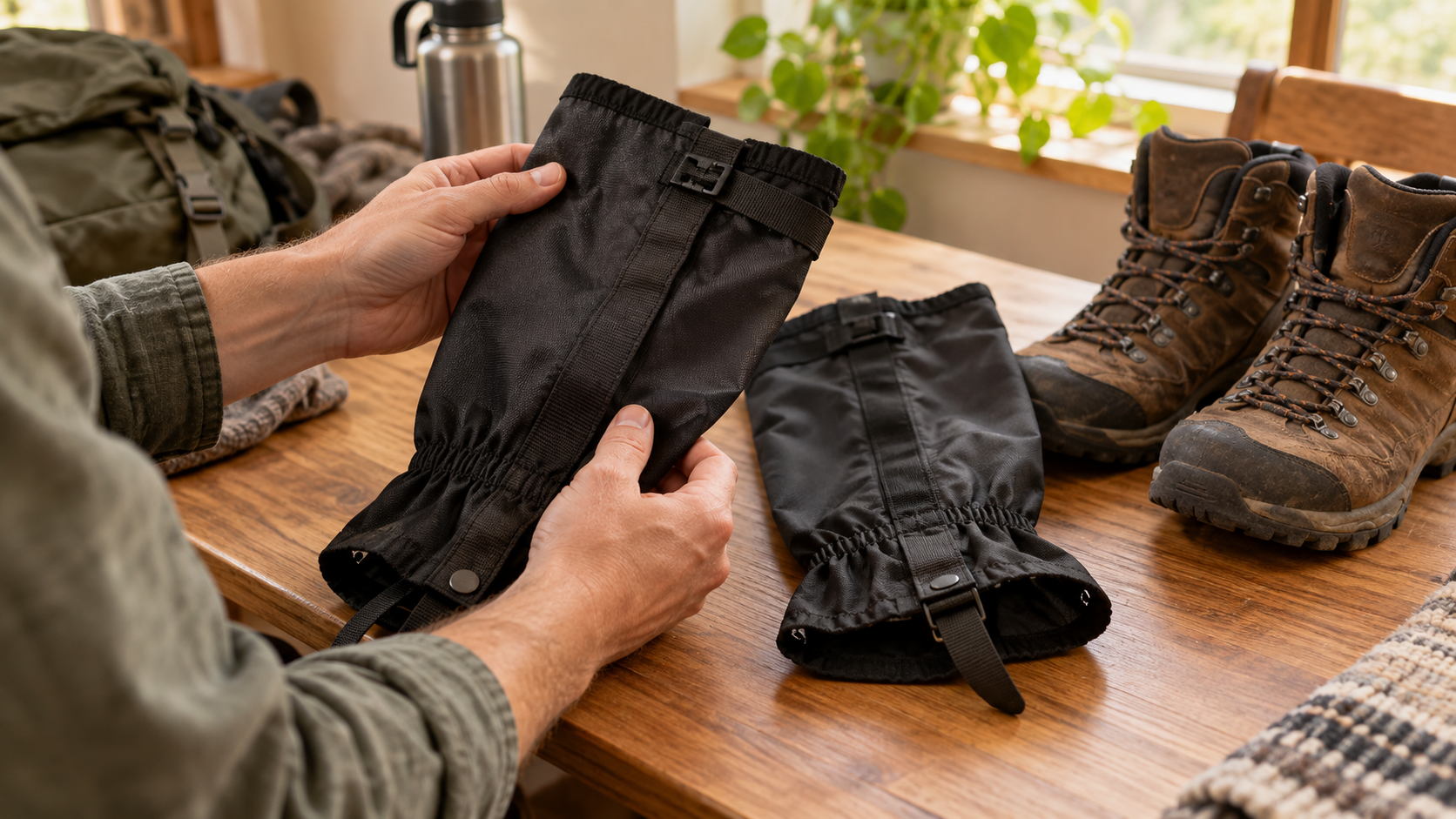
There are useful things you can check at home: whether the size works with your clothing, whether the closures engage as instructed, and whether the gaiters shift during ordinary movement.
Those observations help you assess usability. They do not measure bite resistance.
Follow the manufacturer’s instructions and use our snake gaiter fit and adjustment guide for a practical movement check. Never use a snake or attempt to puncture your equipment to test it yourself.
Keep field precautions in the plan
Testing information should support an equipment decision, not encourage closer contact with wildlife. CDC/NIOSH guidance for outdoor workers recommends avoiding contact with snakes, wearing boots and long pants, and using leather gloves when handling brush or debris.
Protective equipment does not turn reaching into an unseen space or approaching a snake into a safe activity. Your route, task, and behavior still matter.
Use the evidence to make a clearer decision
Good snake gaiter testing information should help you understand a claim, not leave you interpreting an unexplained badge. Look for a connection between the product being sold, the evidence provided, and the limitations described.
When reviewing AVENTURIX Snake Gaiters and their listed features, apply the same questions. Resolve uncertainties about testing, coverage, or compatibility before deciding whether the product suits your outdoor plans.
To review the available AVENTURIX Snake Gaiters listing, use the Amazon button below. Consider its product information alongside the testing questions in this guide before choosing your next pair.