Knowing how to choose snake gaiters starts with four questions: What do they cover? How do they fit your boots and legs? Can you move comfortably? And what evidence supports their protection claims?
A rugged appearance is not enough. The right pair should suit both your outdoor plans and the footwear you actually wear, whether you are hiking a brushy trail, walking to a fishing spot, or checking a fence line.
This guide breaks down what to check before buying—and what to try at home before heading outside.
How to Choose Snake Gaiters: Your Quick Checklist
Before comparing colors or accessories, check these essentials:
- Intended use: Does the manufacturer specifically describe the product as designed for snake protection?
- Coverage: Which parts of the lower leg are covered, and where does that coverage end?
- Fit: Are the measurements compatible with your calves, pants, and boots?
- Movement: Can you walk, step up, and bend your knees without the gaiters shifting or digging in?
- Evidence: Are protection claims supported by clear information about testing and limitations?
If a product page leaves an important question unanswered, ask before ordering. Missing sizing or testing details should not be filled in with assumptions.
Start With the Right Type of Gaiter
Not all gaiters serve the same purpose.
Conventional hiking gaiters are commonly used to help keep dirt, small stones, snow, or moisture out of footwear. A tall design or tough-looking fabric does not automatically make them suitable for protection against snake bites.
When snake protection is your concern, look for a product specifically designed for that purpose. Then examine its construction, coverage, and supporting documentation.
The same distinction applies to footwear: an ordinary hiking or work boot should not be treated as a snake-protection boot simply because it has a thick upper.
Start with the intended use, not the product’s appearance.
Check Coverage, Not Just Height
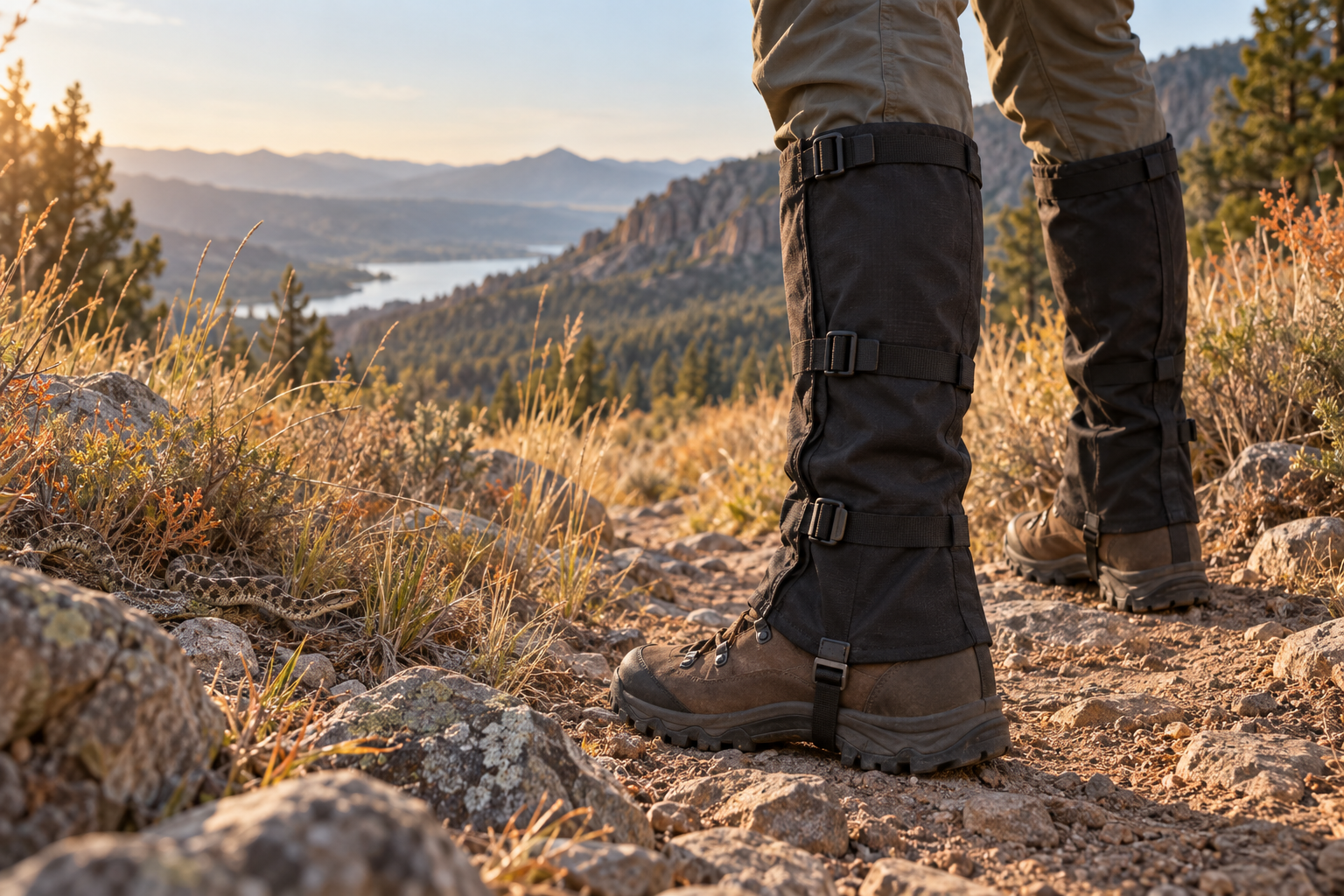
Height is only part of the picture. Look at how the gaiter wraps around the lower leg, how its edges overlap, and how it sits over the boot.
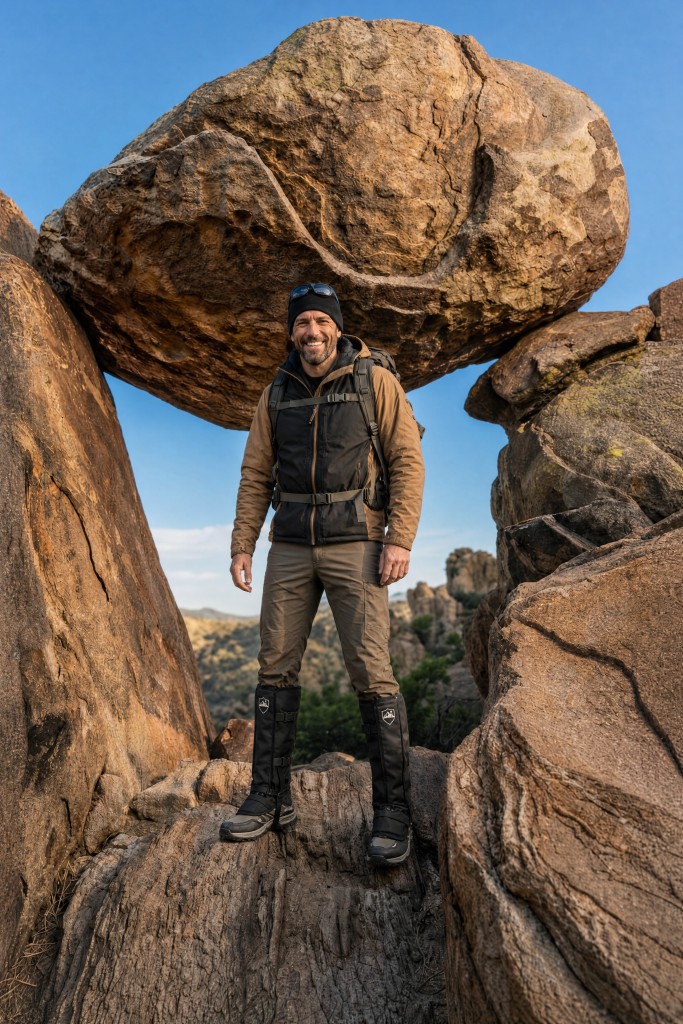
Product photos can help, but they should show more than a straight-on view. Side and rear views make it easier to understand the closure and any areas left exposed.
Before buying, check:
- The stated height and calf-size range.
- Whether the protective construction extends throughout the advertised coverage area.
- How the lower edge meets the boot.
- Whether the manufacturer identifies areas the product does not protect.
Once you have the gaiters, follow the fitting instructions and check them while moving. A pair that looks well positioned when you stand still may sit differently when you bend your knee or take a long step.
Do not assume that covering your shins also protects your feet, knees, or upper legs.
Read Beyond “Tough Fabric” and “Snake Proof”
Material descriptions are useful, but they are not the whole story.
A rugged outer fabric may be intended to handle brush and abrasion. That does not, by itself, establish how the complete gaiter performs against punctures or snake bites.
Likewise, phrases such as “puncture tested” need context. Ask what was tested, how it was tested, and what the results actually show. Was the test performed on a material sample or on the finished product? Does the documentation identify the model being sold?
You may also encounter the phrase “snake proof gaiters.” Treat it as a claim to examine, not a promise that every possible encounter is risk-free.
Look for specific information and clearly stated limitations rather than dramatic demonstrations or reassuring labels alone.
Test the Fit With Your Own Boots and Pants
A sizing chart is your starting point. Your actual clothing and footwear complete the picture.
Measure as directed by the manufacturer, allowing for the pants you plan to wear. Check compatibility with your boots rather than assuming a gaiter will fit every boot shape.
After fitting both gaiters according to the instructions, try a short indoor movement check:
- Walk at your normal pace.
- Step onto a low, stable step.
- Bend your knees and carefully squat.
- Check whether the gaiters rotate, slide, or press against your legs.
- Recheck the closures and boot attachments.
The fit should feel secure without numbness, pinching, or restricted movement. If the gaiters only stay in place when tightened uncomfortably, revisit the fit rather than accepting the discomfort.
Where lace hooks or under-boot straps are supplied, position them exactly as instructed and secure loose ends.
Think About Comfort Over the Whole Outing
A quick try-on cannot tell you everything about a long day outside, but it can reveal obvious problems.
Consider how the gaiters feel with your usual clothing and how much they affect your stride. Weight, stiffness, heat, and pressure points all deserve attention.
Your activity matters, too. A hunter who frequently kneels may notice different fit issues than someone walking a maintained trail. An angler approaching a bank needs freedom of movement, but should not mistake gaiters for wading equipment.
Be equally careful with weather claims. Water-resistant fabric does not mean the entire gaiter is waterproof, and neither description automatically makes it suitable for immersion.
Choose around your real routine, not an idealized product photo.
Put Practical Features Ahead of Extras
Easy-to-use closures and clear care instructions matter more than a long accessory list.
Before buying, find out how the gaiters should be cleaned, dried, inspected, and stored. Ask what to do if a strap, buckle, seam, or protective component becomes damaged.
A carry bag can help keep equipment together. A whistle can be a useful accessory. Neither should outweigh fit, coverage, or evidence supporting the product’s intended protection.
If you are considering our model, you can review AVENTURIX Snake Gaiters and their listed features. Use the same checklist, and contact us if you need clarification before purchasing.
Keep Safe Habits Separate From Your Gear
Protective equipment is not a reason to approach a snake or stop watching where you step.
The National Park Service advises hikers to avoid disturbing snakes, look before placing hands or feet, and carry a flashlight after dark. Its snake safety guidance for Saguaro National Park provides useful background.
Check guidance for your destination as well. No buying checklist replaces awareness of local conditions.
Choose With a Clear Reason
The best starting point is not the longest feature list. It is a pair with understandable coverage, a suitable fit, clear supporting information, and limitations you can recognize.
Before ordering, confirm the measurements, read the instructions, and resolve any unanswered questions.
Ready to take a closer look? Explore AVENTURIX Snake Gaiters for product details and the link to purchase on Amazon.