Hiking in Utah means choosing gear for the route in front of you: a rocky hillside, a sandy desert trail, or a canyon where walking involves entering the water. Rattlesnake awareness belongs in that planning, alongside the conditions that determine your footwear, clothing, and pace.
This guide explains what Utah’s wildlife guidance means for hikers, why local trail rules matter, and how to decide whether snake gaiters belong in your setup.
What Utah’s rattlesnake guidance means for your hike
The Utah Division of Wildlife Resources’ rattlesnake guidance identifies rocky benches, higher-elevation slopes, and dry canyons as common encounter settings. Lower elevations and open ground are not automatically free of snakes.
The agency describes late spring and early summer as particularly active periods. However, rattlesnakes can be encountered at different hours, and they do not always announce their presence by rattling.
For hikers, the practical takeaway is simple: do not use elevation, the clock, or silence as reassurance that you can stop watching the ground. Check visible footing and handholds before moving over rocks or reaching toward a ledge.
Plan hiking in Utah around the specific trail
A statewide packing list is only a starting point. Before choosing equipment, look at what your selected route actually involves. Is it a dry walk? Does it require scrambling? Will you spend substantial time in water? Are you allowed to leave the designated trail?
Two southern Utah examples show why those questions matter.
Snow Canyon: stay within the designated trail network
Snow Canyon State Park’s visitor guidance identifies it as a designated-trail park where off-trail hiking is not allowed. The park explains that leaving trails can damage habitat and collapse wildlife burrows.
Build that restriction into your decisions. A wildlife encounter does not automatically make cutting across nearby vegetation an appropriate alternative. If you cannot continue while maintaining distance and staying on the permitted route, wait from a safe position or turn back.
For a group, discuss this before starting. Having everyone understand that turning around is an acceptable outcome makes the decision easier when a route becomes temporarily obstructed.
Zion’s Narrows: river conditions change the equipment question
The Narrows is a different kind of outing. The National Park Service’s Narrows safety guidance emphasizes cold water, slippery riverbed rocks, strong currents, and flash-flood hazards. It calls for sturdy, closed-toe footwear and preparation appropriate to those conditions.
Snake gaiters should not be treated as a substitute for equipment selected for a river hike. A product’s intended use for snake protection does not establish waterproofing, insulation, or suitability for prolonged immersion.
Before entering a narrow canyon, check the park’s current conditions and weather guidance. A clear sky above the trailhead does not settle the question: storms elsewhere can contribute to flash flooding.
Choose footwear before choosing extra coverage
Start with footwear suited to the route and comfortable enough for the expected distance. Then evaluate any additional lower-leg equipment with those shoes or boots, rather than buying each item in isolation.
For example, a gaiter that fits over one pair of boots may behave differently over another pair with a different upper, sole shape, or lacing arrangement. Compatibility should be checked on the actual combination you will wear.
Our guide to gaiters for hiking and rough trails explains an important distinction: conventional hiking gaiters and products intended for snake protection are not interchangeable categories.
- For sand or debris: evaluate equipment designed for that purpose.
- For rain, snow, or water exposure: check the specific product’s stated weather performance and intended conditions.
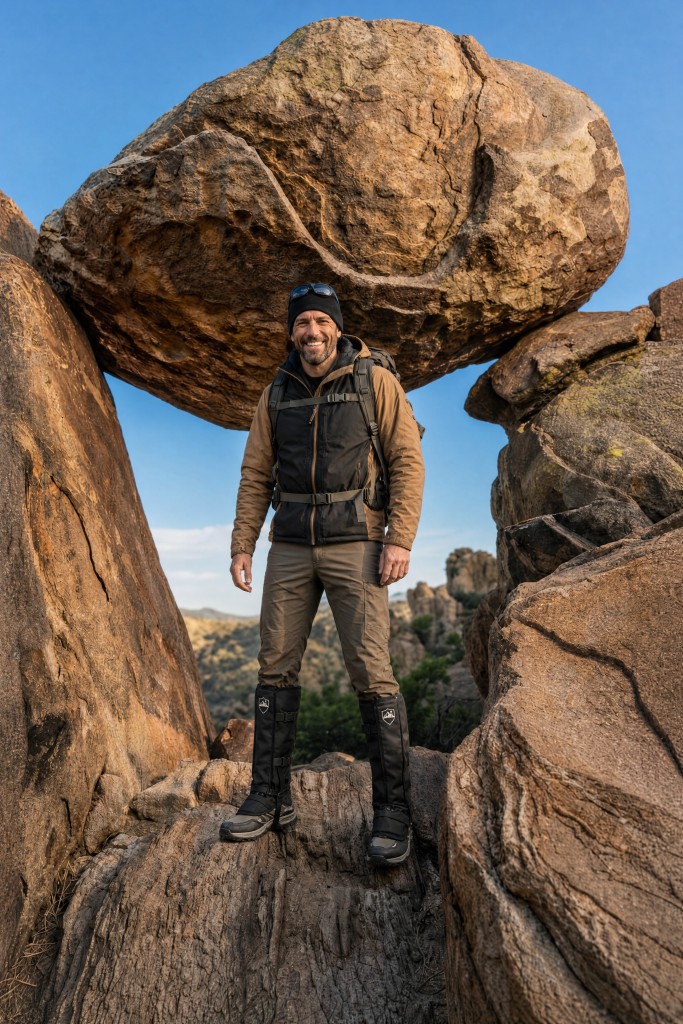
- For additional coverage in snake habitat: review products specifically intended for snake protection, including their limitations.
One product may address more than one need, but its appearance or thickness is not enough to establish what it can do.
Do you need snake gaiters for hiking in Utah?
There is no single answer for every Utah hike. The useful question is whether a particular pair suits your route, footwear, fit requirements, and reason for wanting additional coverage.
If you are considering snake gaiters, make the decision before the trip rather than buying hurriedly at the last minute. Read the manufacturer’s information and leave time to try the complete setup.
- Coverage: understand which parts of the lower leg the product covers and which areas remain exposed.
- Fit: check the stated size range with your pants and footwear.
- Movement: try walking, stepping up, and bending your knees.
- Evidence: look for clear information supporting the manufacturer’s performance claims.
- Limitations: understand where and how the product is intended to be used.
Our guide on how to choose snake gaiters walks through those purchase decisions. You can review the AVENTURIX snake gaiters product information alongside those criteria.
No gaiter guarantees protection from every bite or outdoor hazard. Extra coverage should never become a reason to approach a snake, push through an uncertain route, or ignore where you place your feet.
Keep your response to a snake encounter simple
Utah wildlife officials recommend maintaining at least 10 feet of distance from a rattlesnake, keeping children and pets away, and avoiding attempts to move or harass it. If you hear rattling, locate the sound before moving so you do not step toward the animal.
For a fuller explanation, read what to do if you see a snake while hiking. Your response should focus on distance and a safe route, rather than getting close enough for a photograph or identification.
Make your final decision before leaving the trailhead
Before starting, describe the outing in one sentence: “We are walking a dry designated trail,” or “We are entering a river canyon.” Then check whether your equipment and expectations match that description.
If your itinerary combines very different outings, make a separate gear decision for each. The setup you choose for a dry trail should not automatically carry over to a water-based route the next day.
Hiking in Utah is easier to prepare for when you connect local guidance with specific decisions: where you will walk, what your footwear needs to handle, and whether additional lower-leg coverage serves a clear purpose.
If snake gaiters fit your plans for Utah’s dry trails, use the button below to explore AVENTURIX Snake Gaiters on Amazon and review the product details before choosing your gear.