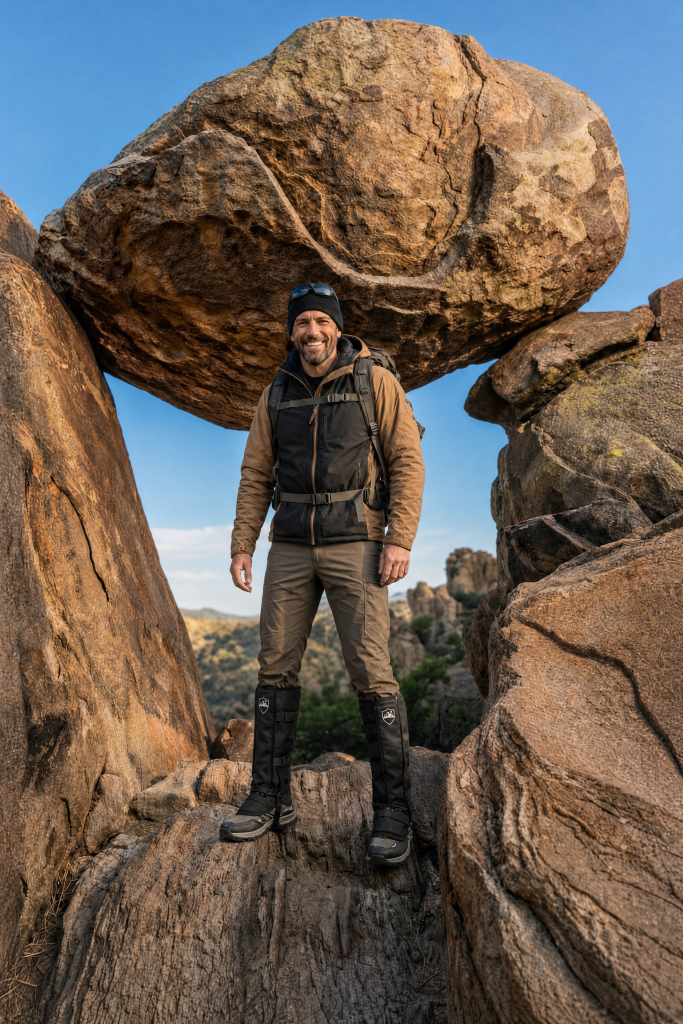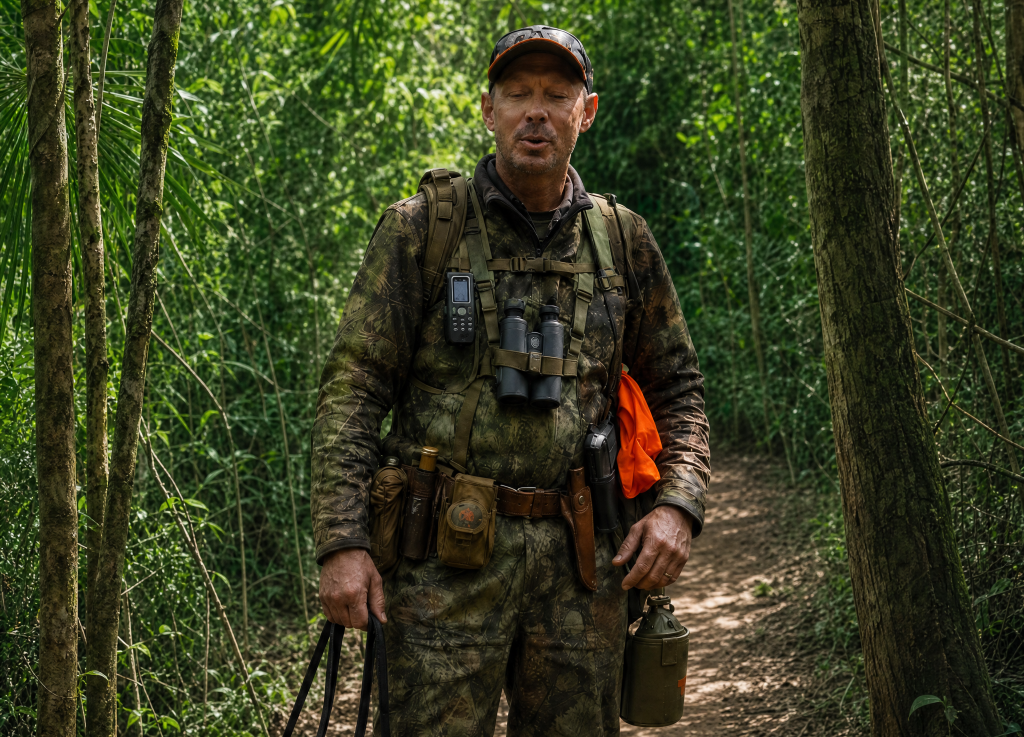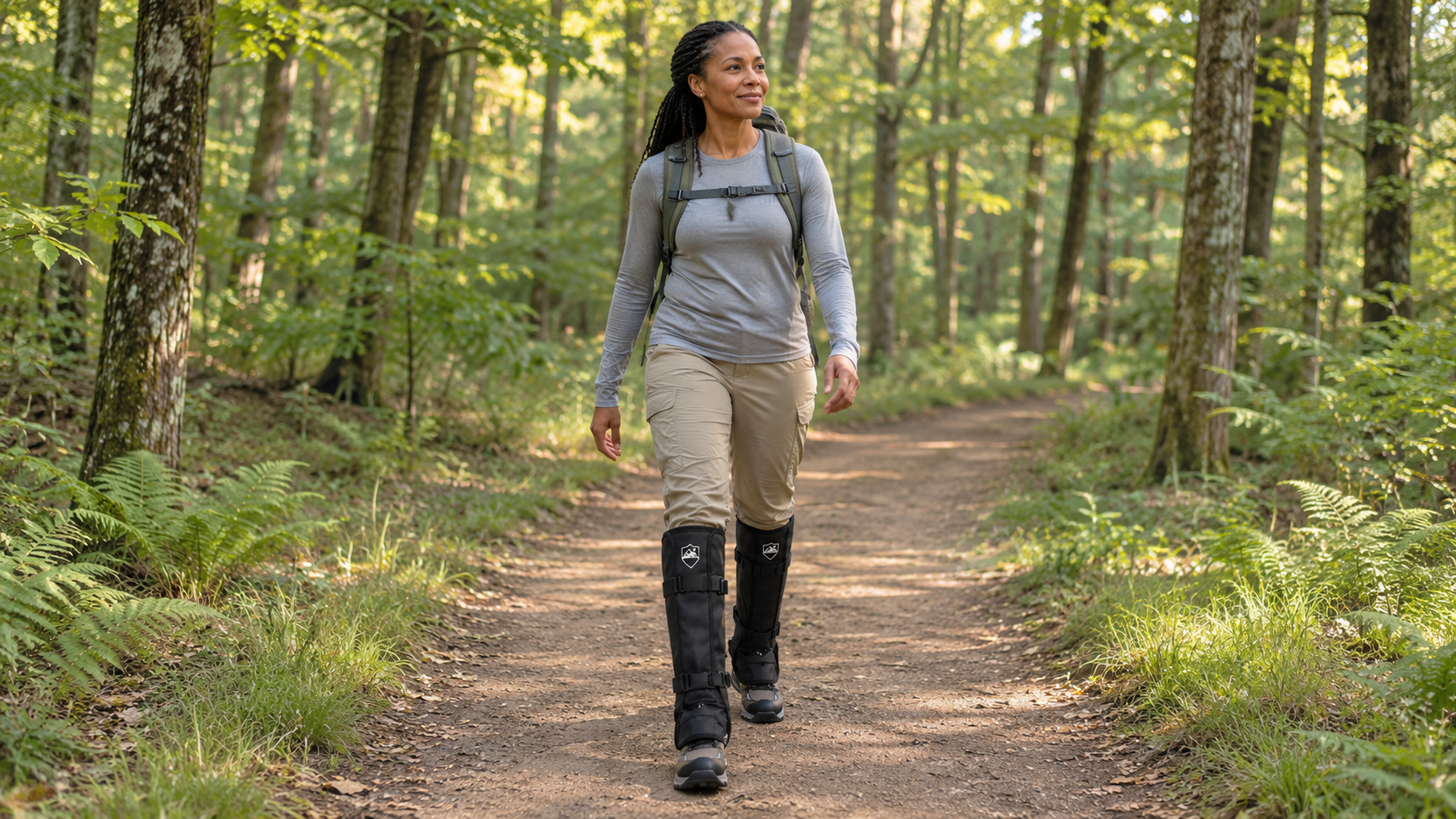
Do not rely on snake gaiters for tick protection unless the specific model has a documented feature intended for that purpose. A product designed for snake protection should not be treated as a complete tick-prevention system. Clothing, repellents, route choices, and checks after your outing still matter.
That distinction is useful when you are preparing for a wooded hike, a hunting trip, or work around overgrown property. Here is how to review the equipment you have and build a practical plan for the whole outing.
Snake Gaiters for Tick Protection: Check the Actual Claim
Start with the manufacturer’s description of the specific model. Look for a clear explanation of any claimed tick protection, how it works, and the instructions that go with it. Thick fabric, structured panels, or sturdy buckles do not establish tick repellency.
Keep these categories separate when comparing products:
| Equipment | Information to check | What not to assume |
|---|---|---|
| Conventional hiking gaiters | Intended use for trail debris, mud, snow, or weather. | That a tall design establishes snake or tick protection. |
| Snake-protection gaiters | Coverage, fit, limitations, and evidence supporting the model’s protection claims. | That snake-protection claims also establish tick repellency. |
| Repellent-treated clothing | The treatment label, listed pests, care requirements, and stated duration of protection. | That treatment protects every exposed part of your body or establishes snake-bite resistance. |
Our guide to gaiters for hiking and rough trails explains the broader equipment categories. If snake protection is part of your purchase decision, use the snake gaiter buying guide to evaluate that need separately.
Build Clothing Around More Than Your Lower Legs
The EPA’s tick-prevention guidance recommends long sleeves, long pants, and boots, along with tucking shirts into pants and pants into socks to reduce clothing gaps. Light-colored clothing can make ticks easier to notice.
Try your clothing and gaiters together before leaving. Follow the gaiter manufacturer’s fitting instructions and smooth out uncomfortable folds. Do not overtighten closures or add tape in an attempt to create a seal the product was not designed to provide.
Think beyond the area covered by the gaiters. Your shirt, waist, sleeves, and other clothing deserve attention too. A neatly fitted pair around the lower legs is not a reason to skip the rest of your clothing plan or your body check afterward.
Can You Treat Snake Gaiters for Tick Protection?
Check both the treatment label and the gaiter manufacturer’s care instructions before applying anything. A product labeled for clothing or gear is not automatically compatible with every fabric, coating, closure, or protective construction.
The EPA’s guidance on repellent-treated clothing explains that factory-treated garments carry treatment instructions and that protection relates to the covered area and pests listed on the label. Follow those directions for wear, washing, and replacement or retreatment.
For snake gaiters, ask the manufacturer whether the specific treatment is permitted on that model. If compatibility has not been confirmed, do not experiment on the gaiters. Consider appropriately labeled treated clothing as a separate part of your outfit.
For exposed skin, choose an EPA-registered repellent labeled for ticks and follow its directions. Permethrin products intended for treating clothing and gear should not be applied directly to skin.
Keep Tick Checks in Your Trail Routine
Choose a maintained route where you can walk in the center without continually brushing against vegetation. EPA guidance recommends limiting contact with tall grass and shrubs. Use that advice when choosing a path, a break location, or an approach to a fishing spot.
For example, if a narrow shortcut requires pushing through brush while an established path stays open, use the clearer permitted route. Extra equipment does not make the shortcut necessary.
At a suitable clear stopping point, look over your clothing and accessible gear. Include the gaiters, pant legs, boot area, and the parts of your pack that contacted vegetation. Finding a tick on clothing is a reason to check further, not proof that it has bitten you.
Keep navigation, water, weather, and communication in the plan as well. Our day-hike preparation checklist helps organize those decisions alongside your clothing and equipment.
What to Do When You Get Home
The CDC’s tick-prevention guidance recommends checking clothing, gear, and your body after outdoor activity, including time in your own yard. Showering soon after coming indoors can help wash off unattached ticks and provides an opportunity to check your skin.
- Examine your gear. Include gaiters, boots, clothing, and your daypack before putting them away.
- Do a full-body check. Use a mirror for hard-to-see areas, including behind the knees, around the waist, under the arms, around the ears, and in the hair.
- Separate garment care from equipment care. Follow the instructions for each item rather than putting your entire outfit through the same cleaning process.
CDC provides heat-treatment guidance for clothing, but that does not establish that snake gaiters can go in a dryer. Confirm the care method for your model before using heat or washing treatments. Inspecting the outside of your gaiters also does not replace checking the skin underneath after removing them.
If You Find an Attached Tick
Remove an attached tick promptly. The CDC’s tick-removal instructions recommend grasping it close to the skin with clean, fine-tipped tweezers and pulling with steady, even pressure. Avoid twisting or jerking, and clean the bite area and your hands afterward.
Do not use heat, petroleum jelly, or nail polish to make the tick detach. If you develop a rash or fever in the days or weeks after a bite, contact a healthcare professional and explain when and where the exposure occurred.
Choose Snake Gaiters and Tick Precautions Separately
Evaluating snake gaiters for tick protection starts with the specific product claim, not the product name. Keep documented equipment features, appropriate clothing, labeled repellents, and tick checks in the same plan.
If you are considering our model for snake protection, review the AVENTURIX Snake Gaiters product information. Ask about any feature or care requirement that is important to your intended use rather than assuming it is included.
If snake protection is also part of your gear planning, use the button below to explore AVENTURIX Snake Gaiters on Amazon and review the model’s coverage, sizing, and limitations.