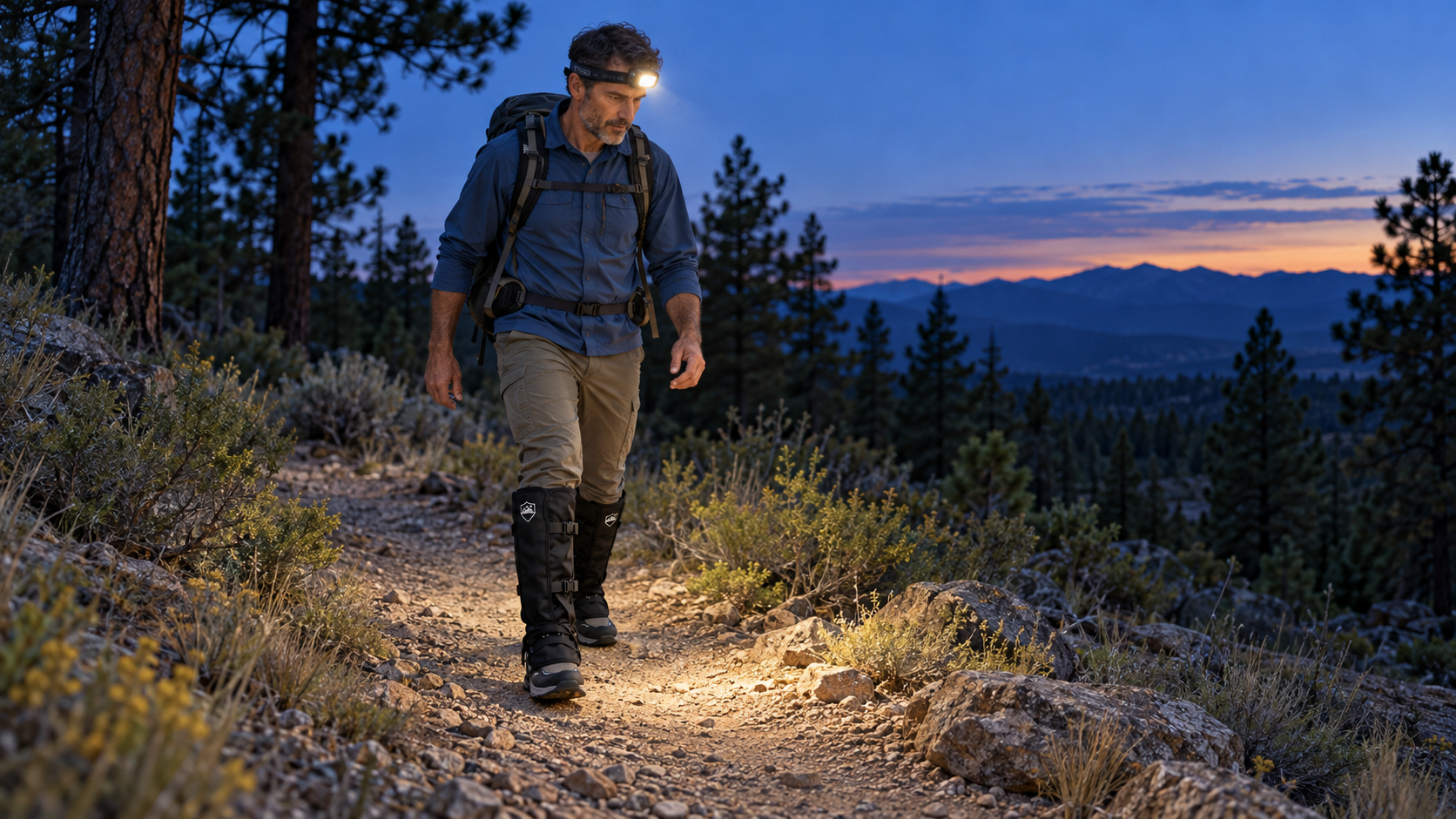
Night hiking in snake country starts with a decision about the route and timing. Check whether walking after dark is permitted and appropriate for your destination, prepare reliable lighting, and leave room to change plans. If a daytime hike runs late, reassess the return while you can still see the trail clearly.
A sunset viewpoint, a delayed descent, and a planned night walk present different challenges. This guide focuses on visibility and decisions after daylight fades. Use our day-hike checklist for snake country for the wider packing and communication plan.
Check Local Advice Before Choosing an After-Dark Route
Start with the land manager’s current trail information, access hours, and wildlife guidance. A trail being open does not necessarily mean it is suitable for your group after dark.
For example, Great Smoky Mountains National Park’s hiking guidance advises visitors to avoid hiking after dark and reach campsites before nightfall. Apply that advice when planning a visit there; do not assume every park takes the same approach.
Colorado Parks and Wildlife’s rattlesnake guidance recommends limiting early-morning and evening activity and taking extra care around dawn and dusk. If early or late activity is unavoidable, it advises using a light and wearing boots.
These examples make a useful planning point: moving a hike to cooler hours also changes visibility. Check both issues rather than treating a later start as a complete solution to daytime heat.
Plan Night Hiking in Snake Country Around the Return
Work backward from when you need to be off the trail. Include the descent, breaks, junctions, and the pace of the slowest person in your group. Set a turnaround time that leaves room for delays.
For a sunset outing, decide beforehand whether the viewpoint can be reached and left without committing to terrain your group cannot manage in darkness. The view should remain optional.
- Identify the return route: note junctions and landmarks before the light fades.
- Keep the group together: agree to regroup at junctions instead of letting faster walkers disappear ahead.
- Make the alternative specific: choose a shorter route or skip an extension while those options are still practical.
A useful test is to ask: “If this section takes longer than expected, what changes?” If the only answer is to hurry downhill in fading light, revise the plan before starting.
Prepare Your Lighting Before You Need It
The National Park Service’s after-dark planning advice recommends bringing lights, spare batteries, and additional light sources. It also cautions against relying on a phone as your light because doing so can drain a battery needed for an emergency.
Give each walker a working light and check it before leaving. Test the controls, confirm the charge or batteries, and keep the light accessible. A headlamp buried under spare clothing is easy to overlook until the trail is already difficult to see.
For a rechargeable light, plan usable backup power or a separate working light. A charging cable alone will not help without a compatible power source.
Before committing to the outing, check whether your light lets you distinguish uneven ground, the trail edge, and where you will place your next steps. Do not choose a walking pace that outruns what you can see.
Pay Attention to Foot Placement and Trail Edges
Watch where you place both feet and hands. Give particular attention to rocks, logs, and vegetation that hide the ground. A light helps you inspect an area; it does not reveal everything behind an obstacle.
Keep your attention on the path while moving. Stop in a suitable visible place to check a map, adjust equipment, or take a photograph. When walking with others, avoid crowding the person ahead or assuming their light covers your own footing.
If you cannot see where a step will land, pause and reassess. Avoid shortcuts through brush when the established route becomes harder to follow.
Choose Boots and Snake Gaiters Before the Outing
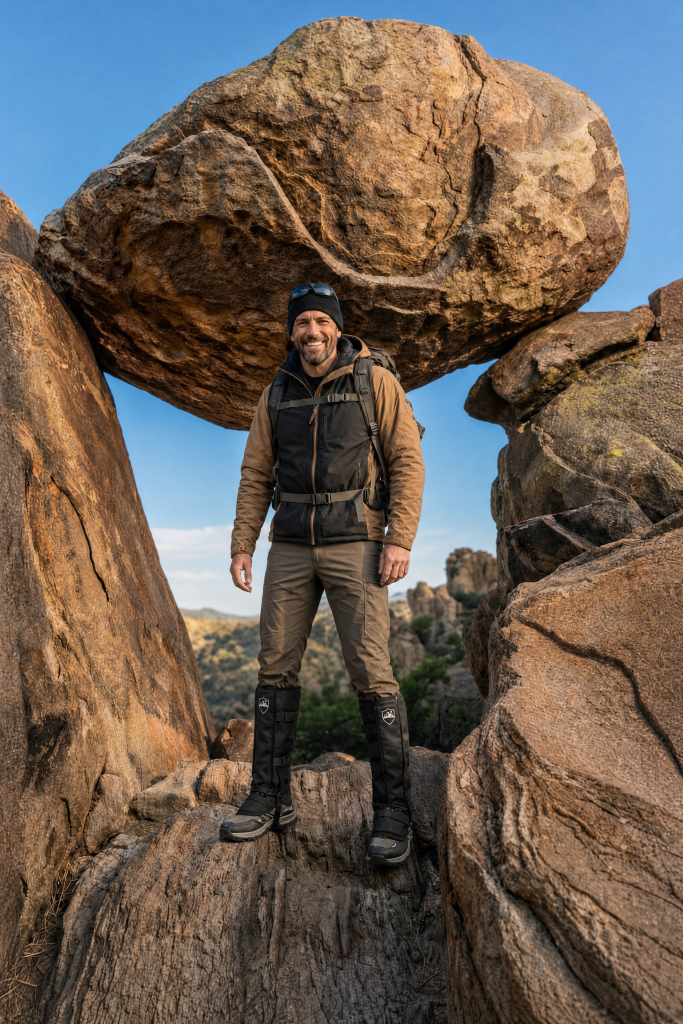
Footwear, pants, and any gaiters should work together before you reach the trailhead. Follow the manufacturer’s fitting instructions, check the closures, and try the complete setup while there is enough light to inspect it.
Conventional hiking gaiters intended for debris or wet conditions should not be assumed to provide snake-bite protection. When considering purpose-designed snake gaiters, examine the stated coverage, sizing, footwear compatibility, and supporting product information. Our guide to choosing snake gaiters explains those checks.
For the AVENTURIX model, review the available snake gaiter features and product details alongside your intended boots and clothing.
No gaiter guarantees protection from every bite. Lower-leg equipment also leaves other areas exposed. Keep your route and visibility requirements the same regardless of the gear you wear.
Recognize When the Plan Needs to Change
Make decisions while you still have options. These examples show how to respond to a changing outing without treating every problem as a reason to walk faster.
| What changes | Practical response |
|---|---|
| Your group is behind schedule before a side trip. | Skip the extension and reassess the return with everyone present. |
| A light becomes unreliable. | Stop somewhere suitable, use your backup, and reconsider the remaining route. |
| You cannot confirm a junction or trail marker. | Pause to establish your location. Avoid guessing a shortcut across unfamiliar ground. |
| You cannot see a safe way past an obstacle. | Keep your distance and consider a known return route or seek assistance. |
If You See or Hear a Snake
Stop approaching. If you hear a rattle, pause until you can locate the animal, then move away carefully while checking your footing. Alert your companions and give the snake room.
Do not approach for identification, attempt to move it with a trekking pole, or step into hidden vegetation to squeeze past. Our guide to what to do during a snake encounter explains the response in more detail.
If Someone Is Bitten
Call 911 or activate your emergency communication device and seek emergency medical care. Do not wait for symptoms or drive yourself to the hospital. Follow responders’ instructions. Review the CDC’s snakebite first-aid guidance before traveling in remote areas.
Make Visibility Part of Your Gear Plan
Preparation for night hiking in snake country combines destination-specific advice, familiar lighting, suitable equipment, and time to change course. Plan for the return as carefully as the outward walk, and reassess when the conditions no longer match your preparation.
If your route calls for considering additional lower-leg coverage, use the button below to explore AVENTURIX Snake Gaiters on Amazon and review the product details before your next outing.