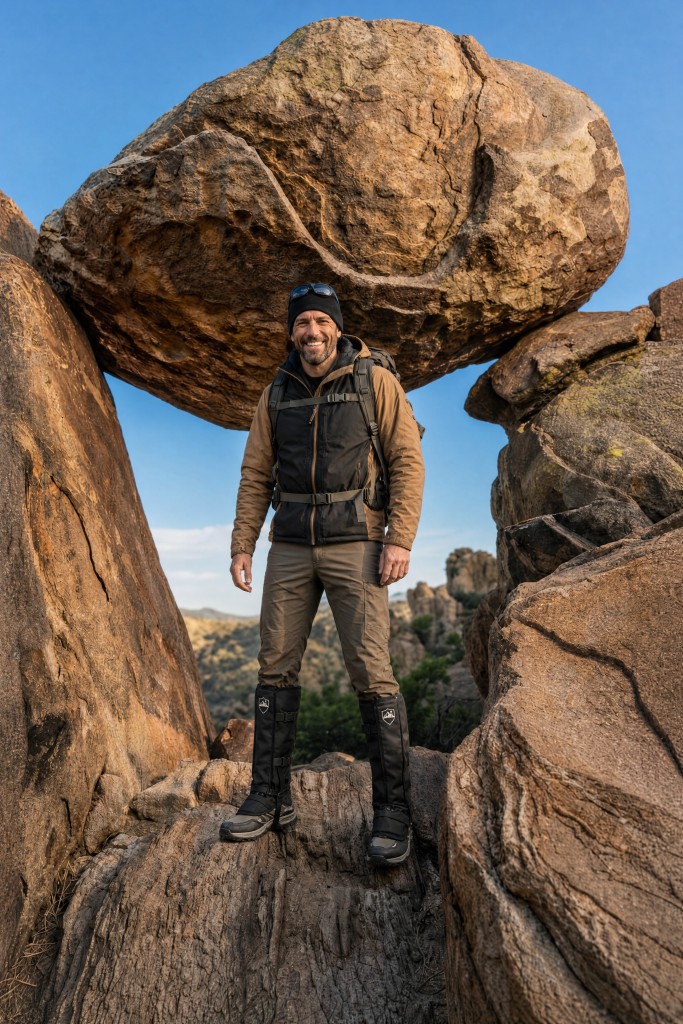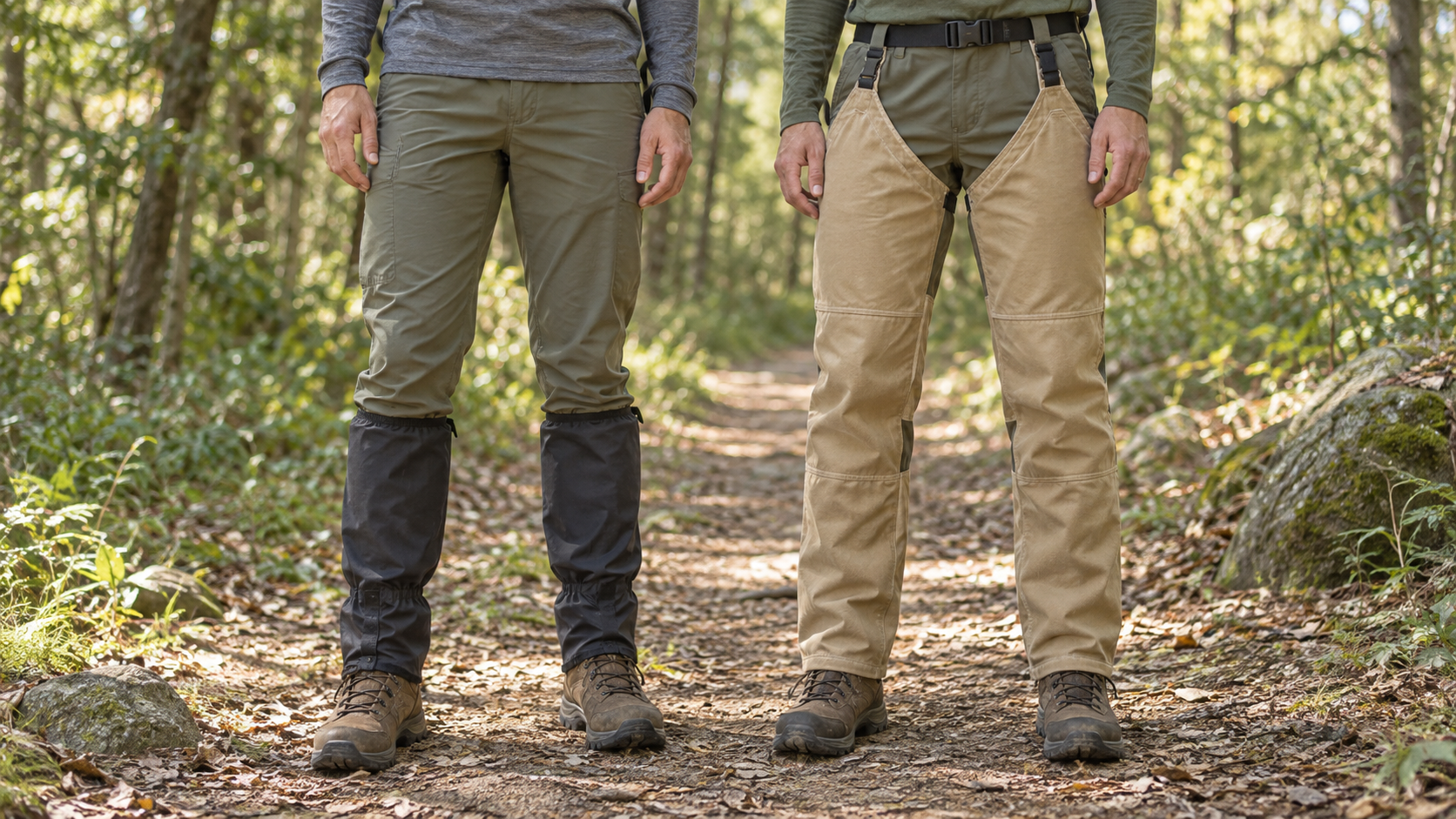
When comparing snake gaiters vs. snake chaps, start with the area you want covered. Snake gaiters generally focus on the lower leg, while full-length snake chaps extend above the knee toward the thigh. That difference affects how each option fits over your clothing and works with your movements outdoors.
More fabric does not automatically mean greater resistance to a snakebite. The specific construction, protective areas, fit, and supporting product information matter too. This guide helps you compare both formats for hiking, hunting, fishing access, and work around outdoor property.
Snake Gaiters vs. Snake Chaps at a Glance
| What to compare | Snake gaiters | Full-length snake chaps |
|---|---|---|
| Coverage | Typically concentrate on the lower leg, often ending below the knee. | Extend above the knee, with full-length designs reaching the thigh. |
| Fit checks | Lower-leg circumference, height, closure overlap, and compatibility with boots. | Leg length, thigh room, knee movement, closures, and the suspension system. |
| Movement | Check for rotation, slipping, and pressure near the top edge. | Check for pulling at the thigh, bunching behind the knee, and dragging hems. |
| Footwear | Worn with separate footwear; do not assume the exposed foot is protected. | Also require separate footwear; boot coverage varies by design. |
| Performance evidence | Evaluate the individual model and its documented limitations. | Evaluate the individual model rather than relying on its greater length. |
Product names are not completely consistent across brands. Before buying, check the actual measurements and coverage description rather than relying on the words “gaiters,” “leggings,” or “chaps.”
Start With Coverage, Then Check What Provides It
Think about the difference between a layer that reaches your calf and one that continues over your knee. If you want coverage above the knee, a below-knee gaiter cannot provide it, regardless of how substantial it looks.
However, the visible height of a garment does not necessarily tell you where its snake-resistant construction is located. Ask whether the protective material extends throughout the garment or only through specified sections. Check the front, sides, back, and closure area in the manufacturer’s description.
Pay particular attention to the connection with your boots. A garment may overlap the boot shaft while leaving the top of the foot exposed. Neither format automatically turns ordinary footwear into snake-resistant footwear.
A useful question for any manufacturer is: “Which areas does this model cover, and what evidence supports its protection claims?” That gives you more useful information than a broad promise of confidence outdoors.
Compare the Fit While Moving
A standing product photo cannot show how equipment behaves when you climb a slope, sit on a low seat, or crouch beside a fence. Try either option with the pants and boots you intend to wear, following the manufacturer’s fitting instructions.
What to check with snake gaiters
Measure your lower leg over your usual clothing and compare that measurement with the product’s fit range. Check that the closures fasten as intended and that the gaiter sits correctly around the boot.
During a short walk, watch for slipping, rotation, or a top edge that presses into your leg. If you need to keep stopping to reposition the gaiters, resolve the fit before using them on a longer outing.
What to check with snake chaps
With full-length chaps, check the thigh fit and leg length as well as the lower section. If the model attaches to a belt, try it with that belt and any pack you normally carry.
Raise one knee, take a long step, and sit down. Look for tension at the attachment points, fabric bunching behind the knee, or hems catching beneath your boots. Also check that you can reach the pockets and equipment you use regularly.
For either format, tightening everything as much as possible is not a substitute for choosing the right size.
Match the Choice to Your Outdoor Routine
Your activity provides a useful starting point, but the label “hiking” or “hunting” does not decide the answer on its own. Consider the route, the coverage you want, and the movements you repeat throughout the day.
Hiking and walking to fishing spots
If your priority is lower-leg coverage with separate boots, gaiters are a format worth evaluating. During a fitting trial, pay attention to repeated steps, uphill movement, and whether the equipment stays positioned without constant adjustment.
If you want coverage above the knee, compare longer designs directly. Do not assume that a short walk makes coverage irrelevant, or that a long walk automatically rules out chaps. Fit and the individual product still determine how practical either option will be.
Hunting with frequent sitting or crouching
Try your setup in the positions you actually use. Sit on your hunting seat, kneel on a clean surface, and shoulder your pack. Check whether closures rub, fabric pulls, or the equipment interferes with your normal movements.
Hunters considering coverage farther up the leg may want to evaluate full-length chaps. Those comparing lower-leg options can also read our guide to snake gaiters for hunting.
Property maintenance and field work
For repeated outdoor tasks, think beyond the walk to the work area. Can you bend, carry equipment, and access your tools comfortably? Will you need to remove and refit the garment several times during the day?
For workplace use, follow your employer’s protective-equipment requirements. Do not assume that a garment designed for snake protection also meets the requirements for operating a chainsaw or other machinery.
Check Comfort Without Relying on Category Labels
Compare the listed weight of the actual products, making sure each figure refers to the same thing: one leg covering or a complete pair. Also check the size associated with that weight.
Material stiffness, closure placement, and the way a garment sits against your clothing deserve attention alongside weight. A lighter item that shifts constantly may be less convenient for your routine than another option that fits correctly.
For warm-weather outings, assess comfort during a short trial in a suitable setting. Avoid assuming that every gaiter will feel cooler than every chap. Construction and fit vary, and comfort claims need to be checked against the specific model.
Review the care instructions before buying as well. Look for clear guidance on cleaning, drying, storage, and what to do if a closure or protective section becomes damaged.
Do Not Confuse Brush Protection With Snake Protection
When shopping, distinguish between ordinary hiking gaiters, brush chaps, and products specifically intended for snake protection. A tough appearance, camouflage pattern, or thick outer fabric is not enough to establish that purpose.
Check how the manufacturer describes the product and what documentation it provides. If a listing mentions testing, look for information that connects the test to the model being sold.
Useful questions include:
- What material or finished product was tested?
- Which areas and components were included?
- What test method and conditions were used?
- What results and limitations does the manufacturer report?
If important details are missing, ask for clarification before treating a marketing statement as proof of performance. This comparison does not establish that one category resists bites better than the other.
Keep Safe Habits Part of Either Setup
Neither gaiters nor chaps should encourage you to approach or handle a snake. Equipment choice is one part of preparation, alongside the route you take and the way you move through it.
The CDC’s guidance for outdoor workers around venomous snakes recommends avoiding tall grass and leaf piles when possible, wearing boots and long pants, and not touching or handling snakes. It also advises avoiding rocks or wood piles where snakes may be hiding.
Choose your route with those precautions in mind, regardless of which leg covering you wear.
Which Option Should You Choose?
Start by deciding whether you are seeking lower-leg coverage or coverage that continues above the knee. Then compare individual products for fit, documented construction, footwear compatibility, and comfort during your usual movements.
Consider gaiters when their lower-leg format matches your requirements. Consider full-length chaps when you want to evaluate coverage farther up the leg and can accommodate the longer garment in your setup. Neither decision should rely on the product name alone.
For a more detailed buying checklist, read how to choose snake gaiters.
If lower-leg coverage fits your plans, explore AVENTURIX Snake Gaiters. Review the available product information and follow the Amazon purchase link when you are ready to check the current listing.