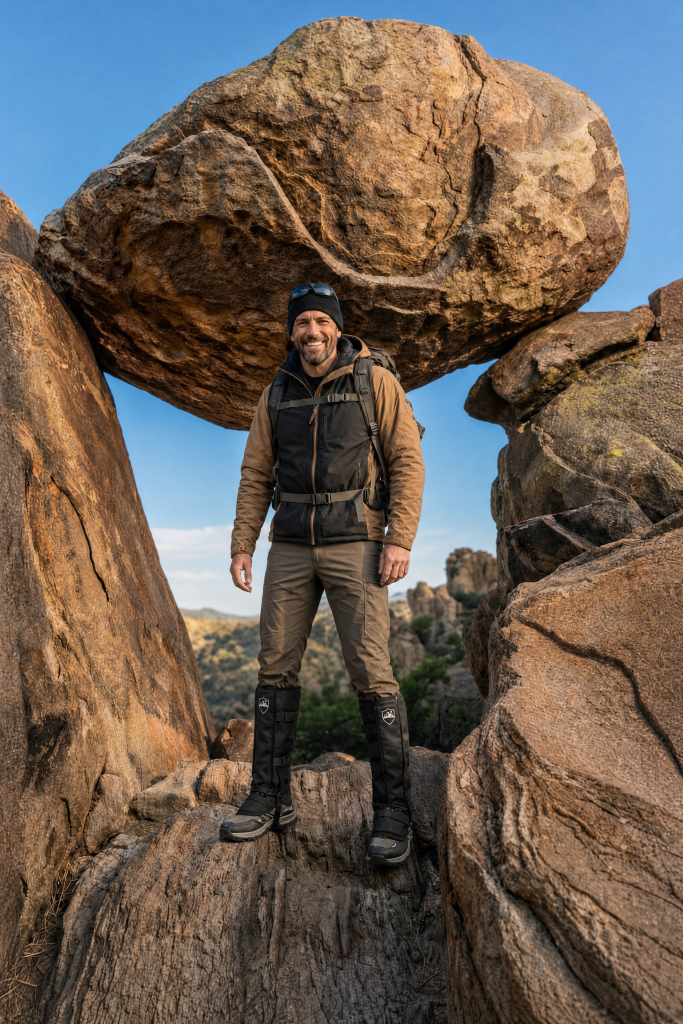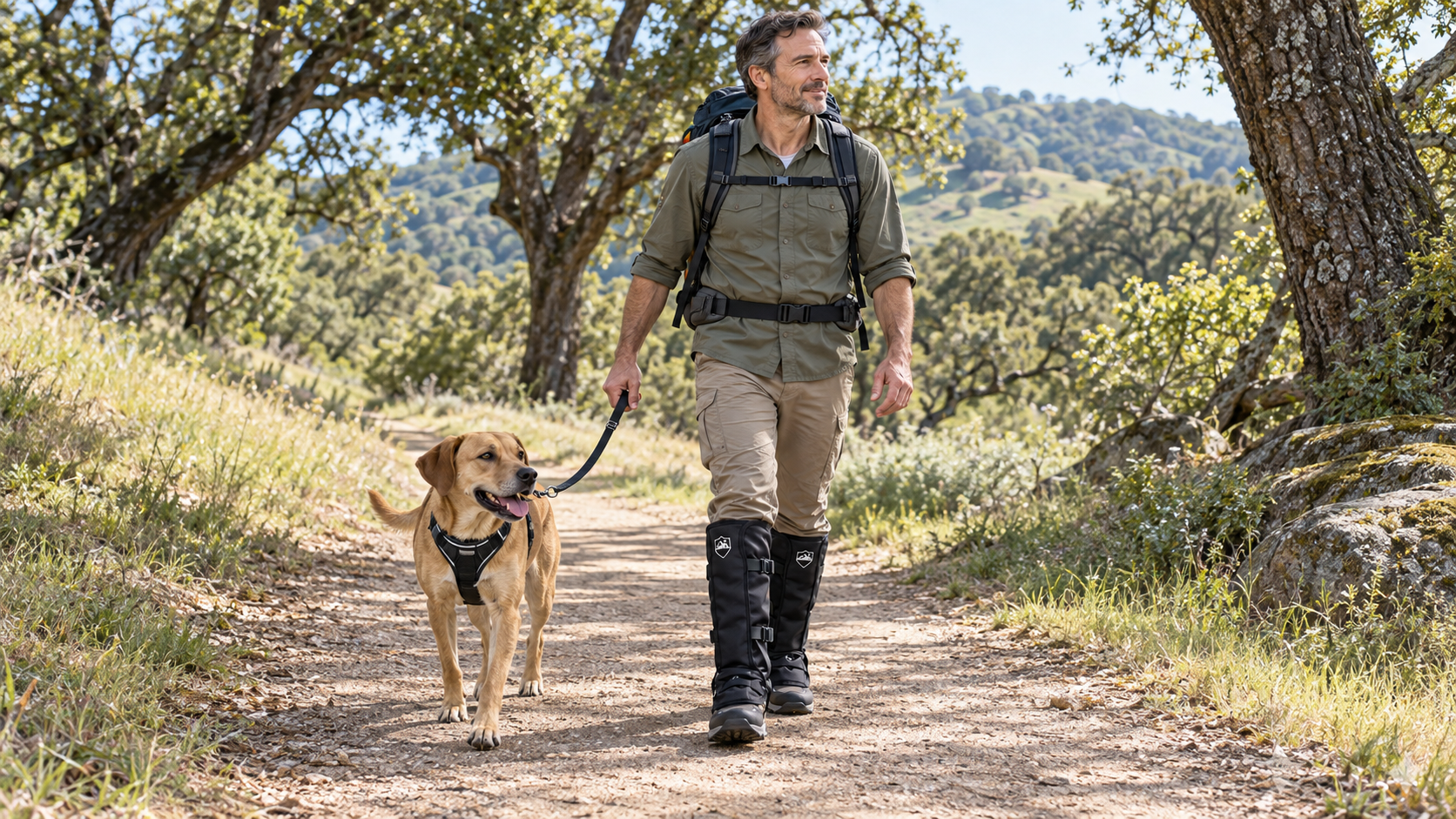
Hiking with dogs in snake country starts with choosing a suitable route and keeping your dog close enough to guide away from wildlife. A leash, clear footing, and a realistic return plan matter before you consider extra equipment for yourself.
This guide focuses on the decisions that change when a dog joins the hike: trail access, leash handling, rest stops, and emergency planning. Snake gaiters can be considered for the person wearing them; they do not protect the dog.
Check the Exact Trail’s Pet Rules
A park that welcomes dogs in a campground or parking area may prohibit them on nearby trails. The National Park Service’s hiking-with-pets guidance recommends checking the destination before bringing your pet.
Look up the specific trail, not just the park’s general description. Check leash requirements, closures, and whether every section of your proposed loop allows dogs. If the information is unclear, contact the land manager before traveling.
Consider your dog’s fitness and behavior, too. A route you enjoy alone may not suit a dog that tires quickly or becomes difficult to manage around other hikers. Ask your veterinarian about suitability if you have concerns.
Choose Space and Visibility Over Extra Mileage
When comparing routes, picture walking the narrower sections with your dog beside you. Can you see the ground ahead? Is there room to pause without stepping into brush? Could you comfortably turn around with the leash in hand?
For example, a short, maintained out-and-back route may give you more manageable choices than a longer loop with tight passages and limited places to stop. That is a planning decision, not a claim that any trail is snake-free.
Avoid making distance the only measure of a successful outing. If keeping your dog close requires constant pulling or leaves you unable to watch your own footing, shorten the walk or choose another route.
Use a Leash You Can Manage While Hiking With Dogs in Snake Country
At Petroglyph National Monument, the B.A.R.K. Ranger rules require a leash no longer than six feet and connect that rule with hazards including rattlesnakes. Follow your destination’s own rules, and keep the dog from approaching wildlife.
The useful question is not simply whether a leash is attached. It is whether your dog can reach a hidden trail edge before you can guide it away.
- Keep your dog on the visible path rather than allowing it to investigate brush or gaps between rocks.
- Manage spare leash so it does not trail around your boots or tangle with equipment.
- Stop before checking your phone, adjusting your pack, or taking a photograph.
- If hiking with another adult, agree who holds the leash during gear adjustments.
Practice ordinary walking, stopping, and turning in a familiar setting before attempting a more demanding route. Do not test your dog’s response by deliberately approaching a snake.
Pack for Two Sets of Needs
Carry drinking water for yourself and your dog, a bowl, waste bags, and the supplies appropriate to the outing. Make water breaks part of the plan instead of treating them as an optional stop.
Think about access inside the pack: can you reach the bowl without unloading everything while holding the leash? Keep frequently used items together so a routine stop stays straightforward.
For navigation, lighting, and your own essential supplies, use our day-hike checklist for snake country. Add the dog’s needs to that preparation rather than replacing your own supplies to save space.
Check Your Footwear and Gaiters Before Adding the Leash
Try your complete clothing setup before the trip. If you wear snake gaiters, follow the manufacturer’s instructions and check movement over the pants and boots you will actually use.
Once the fit is comfortable, practice walking with your usual pack and leash. Notice whether you can stop, turn, and reach supplies without repeatedly looking down to rearrange your equipment.
Our snake gaiter fit and adjustment guide covers the fitting process. Conventional hiking gaiters and products designed for snake protection serve different purposes; review the specific model’s intended use and limitations.
No gaiter guarantees protection from every bite. Additional coverage should never change your decision to keep your dog and yourself away from a snake.
If You See a Snake, Create Distance Together
Stop advancing, keep your dog from approaching, and retreat carefully while watching your footing. Do not release the dog, let it investigate, or attempt to clear the path by moving the snake.
NPS guidance for visiting El Malpais emphasizes giving rattlesnakes space and backing away. If passing would bring either of you closer, wait at a distance or turn back.
Read our snake encounter guide for the broader response. You do not need a close photograph or a species identification to decide to leave the animal alone.
Know Where to Get Veterinary Help
Before leaving, save the contact details and location of an emergency veterinary clinic near your destination. Consider how you would return to your vehicle if your dog could not walk.
If your dog is bitten, seek immediate veterinary evaluation. UC Davis veterinary guidance warns against waiting for symptoms to appear or worsen. Call the clinic and follow its instructions.
Choose Equipment Around the Walk You Actually Plan
Hiking with dogs in snake country calls for a manageable route, close supervision, and preparation for both companions. If you are evaluating additional coverage for your own lower legs, review the AVENTURIX Snake Gaiters product information alongside your footwear and clothing requirements.
For your next dog-friendly outdoor walk, use the button below to explore AVENTURIX Snake Gaiters on Amazon and check the product details before choosing your setup.