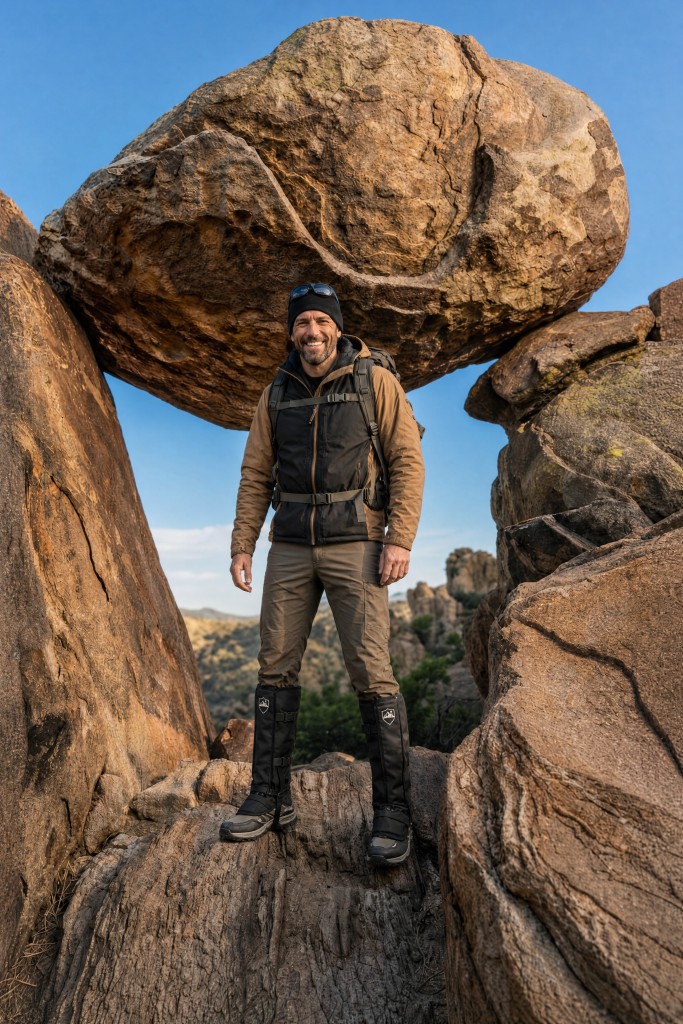
Learning how to wear snake gaiters starts with your usual outdoor pants and boots. Position each gaiter according to its instructions, secure the closures and any boot attachments, then check the fit while walking and bending your knees. You should not need to keep pulling the gaiters back into position.
Different designs use different fastening systems, so there is no universal buckle order or strap setting. Use this guide as a practical fit checklist alongside the instructions supplied with your particular model.
Before You Put Them On
Set up in a clean, open area where you can sit down and inspect both gaiters. Your first fitting is easier at home than beside a trail when everyone is ready to leave.
Have these items ready:
- The pants, socks, and boots you intend to wear.
- The manufacturer’s fitting instructions and size information.
- Both gaiters, with their closures opened and straps untangled.
Check for damaged stitching, cracked components, worn straps, or closures that do not engage properly. Ask the manufacturer about questionable damage before relying on the equipment.
If you are still deciding which model suits your needs, start with our guide to how to choose snake gaiters. This article focuses on fitting the pair you have.
How to Wear Snake Gaiters Over Pants and Boots
1. Get your clothing and footwear ready
Put on your usual socks and pants, then fasten your boots as you normally would. Smooth out bulky folds of fabric where the gaiter will sit.
Do not use unusually thin clothing just to make a tight gaiter close. Check the fit with the layers you actually plan to wear. If the product has a sizing chart, follow its measuring instructions rather than borrowing measurements from another brand.
2. Identify the correct orientation
Check for left and right markings, a shaped boot section, or a diagram showing which way the closures face. Do not assume every gaiter closes at the front or that every buckle belongs on the same side.
Position the gaiter as instructed, paying attention to its height and the way it meets the boot. Avoid rolling or folding protective sections to shorten the garment.
3. Close the gaiter and adjust it gradually
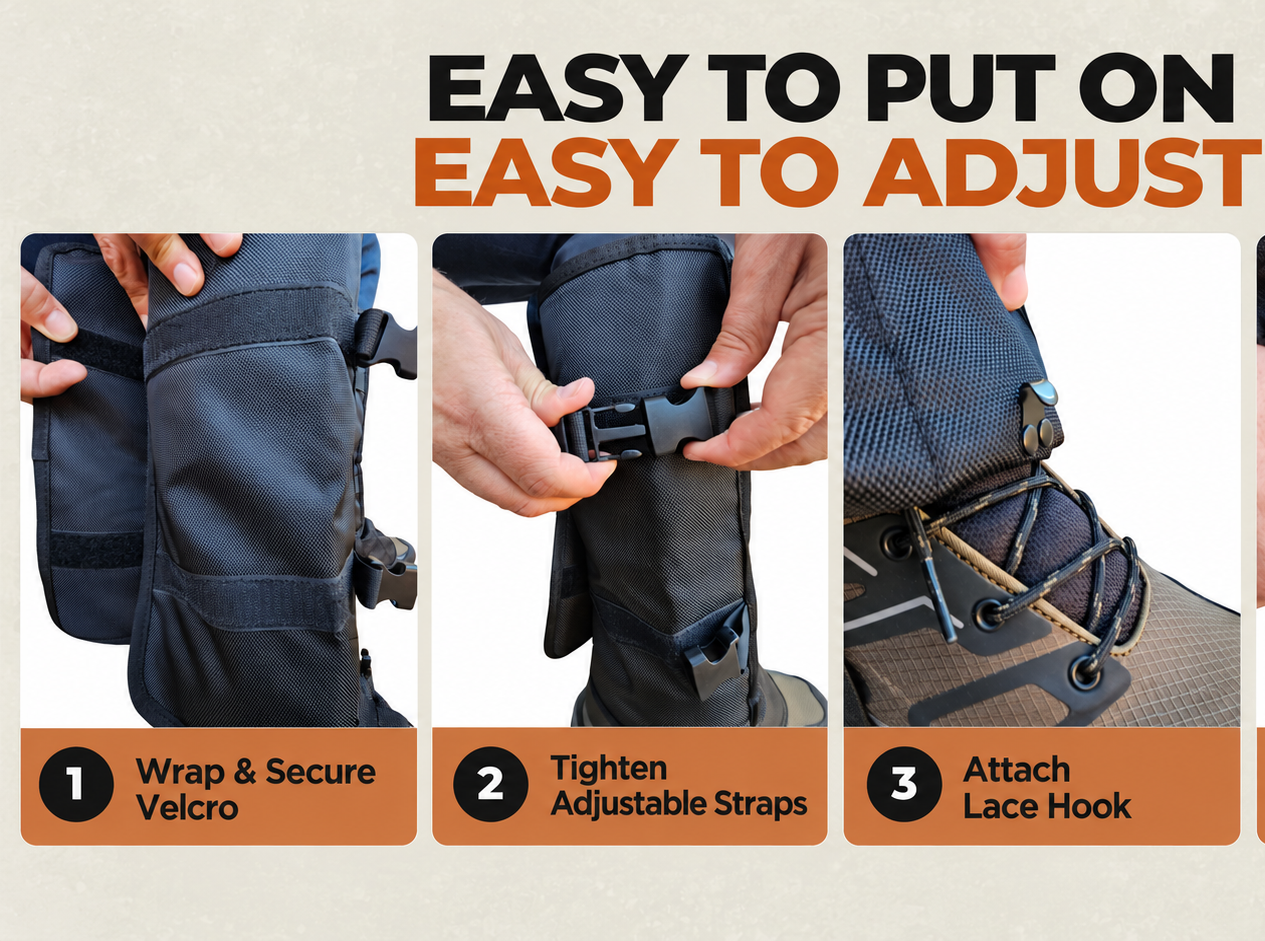
Follow the fastening sequence for your model. Bring the closure panels together as intended, checking that fabric is not trapped in a buckle or zipper.
Adjust straps in small increments. The aim is the manufacturer’s intended fit, not the tightest setting you can achieve. If the closures cannot engage correctly, stop and review the size and positioning.
Keep any required overlap in place. A closure that barely reaches is a reason to check sizing, rather than compensate by pulling harder.
4. Secure the boot attachments, if supplied
Some gaiters use a lace attachment, an under-boot strap, or both. Others use a different retention system. Fit only the components supplied or approved for your model, following its instructions.
AVENTURIX’s product page describes adjustable buckles, a lace hook, and an under-boot strap. When fitting that style, check each attachment rather than relying on the calf straps alone.
Make sure an under-boot strap is routed as specified and is not twisted. Secure loose strap ends using the provided retainers. Do not improvise a new routing or attachment point because it looks similar to another product.
Check the Fit While Moving
A gaiter can look correctly positioned while you stand still and feel different as soon as you take a step. Before heading out, try a short movement check in an open area:
- Walk several steps at your normal pace.
- Turn around and check whether either gaiter has rotated.
- Raise each knee as you would when stepping up.
- Sit down and stand up again.
- Inspect the closures and the connection with each boot.
Notice where you feel pressure or rubbing. Check whether the top edge interferes with bending your knee and whether the lower section stays in its intended position.
This is a comfort and positioning check, not a test of bite resistance. Never test protective equipment with a snake or by attempting to puncture it yourself.
Troubleshooting Common Fit Problems
| What you notice | What to check | Next step |
|---|---|---|
| The gaiter slides down. | Size, positioning, strap adjustment, and required attachments. | Refit according to the instructions. If it continues slipping, ask the manufacturer about compatibility. |
| The gaiter rotates as you walk. | Orientation, closure alignment, and boot attachments. | Reposition it and repeat the walking check. |
| The top edge presses behind your knee. | Garment height and position. | Check the recommended fit. Do not fold the protective section to shorten it. |
| A closure will not engage fully. | Trapped fabric, debris, damage, or a size mismatch. | Address the cause rather than forcing the closure. |
| The setup feels restrictive. | Strap tension and clothing folds. | Stop and refit. If a comfortable, correctly secured fit is not possible, reconsider the size or model. |
Recheck When You Change Your Setup
Do not assume yesterday’s settings will work with different boots or thicker pants. Repeat the fitting check whenever your clothing or footwear changes.
During an outing, stop in a suitable clear location if a gaiter starts slipping, rubbing, or coming loose. Resolve the issue before continuing instead of repeatedly tugging at it while walking.
If you remove the gaiters during a break, check all closures and attachments when you put them back on. It is easy to overlook one component when the straps already appear adjusted.
Keep Fit and Protection Claims Separate
A well-positioned gaiter does not establish how much protection its materials provide. Fit, coverage, construction, and supporting test information are separate considerations.
The African Snakebite Institute’s overview of snake gaiters describes different fastening designs and distinguishes snake gaiters from ordinary outdoor gaiters. Its regional guidance should not be treated as certification of a particular product for use in the United States.
Check your model’s intended use and limitations. Lower-leg coverage does not automatically protect exposed footwear, knees, thighs, or hands, and no gaiter guarantees protection from every bite.
Make the Fit Check Part of Your Routine
Before each outing, confirm that both gaiters are correctly positioned, their closures engage properly, and all required attachments are secured. Take a few steps before committing to a longer route.
If you are considering a wraparound design, review AVENTURIX Snake Gaiters and their fastening features. The product page also links to Amazon, where you can check the current listing before purchasing.