
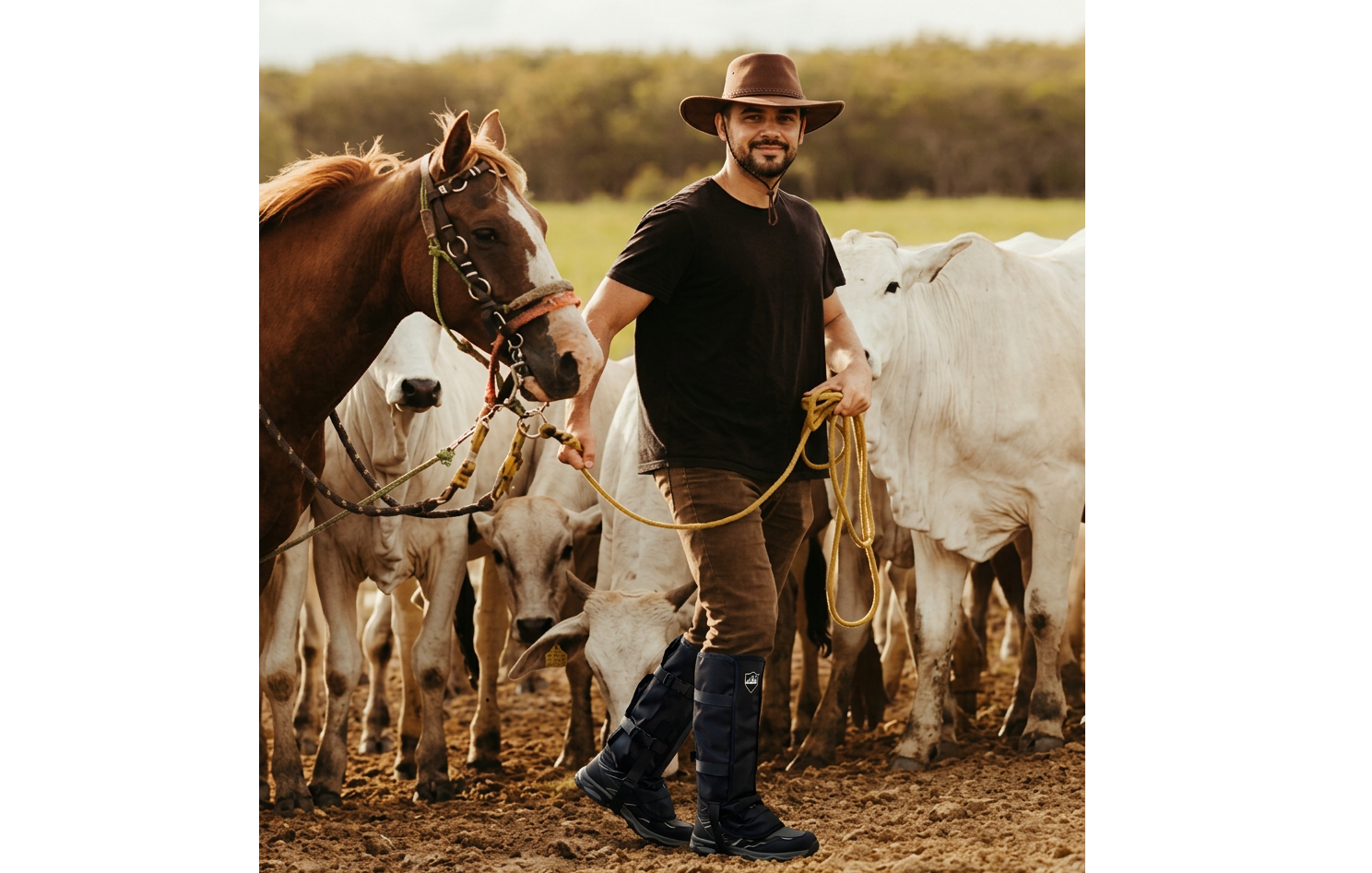
Snake gaiters for fishing can add useful lower-leg coverage when reaching a riverbank means crossing reeds, brush, rocks, or ground you cannot see clearly. Similar conditions affect farmers, surveyors, maintenance crews, gardeners, and other people working beyond maintained paths.
The right equipment depends on the task. Gaiters may help create a barrier against vegetation, mud, debris, and possible snake exposure, but they do not replace suitable boots, safe work procedures, or awareness of the ground around you.
This guide explains where lower-leg gaiters may be useful, how to fit them for repeated movement, and which limitations anglers and outdoor workers should understand.
Why Riverbanks and Working Land Create Blind Spots
Many outdoor tasks take place where visibility at ground level is limited. Grass may hide holes and uneven surfaces. Leaves can cover rocks or fallen branches. Stored materials, irrigation equipment, fence lines, and brush piles create sheltered spaces that should be approached carefully.
Anglers may concentrate on the water while stepping through shoreline vegetation. Field workers may focus on a fence, crop, instrument, or piece of equipment rather than the space beside their boots.
Protective gaiters are most useful when they form part of a deliberate routine: inspect the area, wear appropriate clothing and footwear, use suitable tools, and avoid placing hands or feet into spaces you cannot see.
Using Snake Gaiters for Fishing
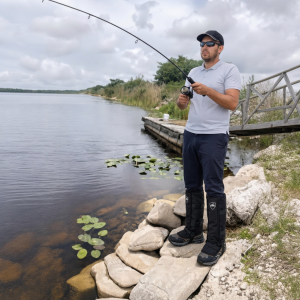
Fishing access points vary considerably. A maintained pier presents different conditions from a brushy pond edge, creek bank, or remote stretch of river.
Before approaching the water, look at the route rather than focusing only on the fishing spot. Watch for unstable rocks, steep or muddy banks, thick vegetation, submerged edges, and places where wildlife may be concealed.
Tall snake gaiters may be appropriate when the approach crosses brush, reeds, grass, or rocky ground in an area where snakes may be present. They should not be treated as waders, flotation equipment, or footwear designed for standing in water.
A water-resistant outer fabric may help shed splashes, mud, or contact with damp vegetation. It does not make the complete gaiter waterproof or suitable for immersion. Anglers should still choose footwear with appropriate traction and use a personal flotation device whenever conditions require one.
When Gaiters May Help With Field Work
Field work covers many different activities, so no single piece of equipment suits every job. Potential uses for lower-leg gaiters include:
- Walking fence lines or property boundaries.
- Surveying land with tall grass or dense vegetation.
- Inspecting irrigation ditches, orchards, or planted fields.
- Clearing light brush or maintaining overgrown areas.
- Working around lumber, rocks, stored materials, or outdoor equipment.
- Gardening or landscaping on properties where snakes may be present.
The gaiters should be selected as part of the complete task assessment. Gloves, eye protection, boots, hearing protection, high-visibility clothing, or other equipment may also be necessary.
For employees, personal protective equipment must follow the employer’s safety procedures and applicable requirements. A personally purchased product should not replace equipment or controls specified by a supervisor, safety plan, or risk assessment.
Match the Gaiters to the Activity
| Situation | What to consider | What gaiters do not replace |
|---|---|---|
| Approaching a brushy fishing bank | Lower-leg coverage, boot traction, freedom to step and crouch | Waders, flotation equipment, or water-safety planning |
| Walking fields or fence lines | Fit during long periods of walking, heat, and changing ground | Suitable work boots and task-specific PPE |
| Handling brush or debris | Secure fit and resistance to snagging | Protective gloves, tools, and safe handling procedures |
| Surveying or property inspection | Mobility, visibility, weather, and communication | A check-in procedure or emergency plan |
This distinction matters because “outdoor protection” is not a single function. Equipment should match both the environment and the task being performed.
Check Coverage and Fit Before Starting
Gaiters should be fitted with the pants and boots you plan to use. Do not assume that one adjustment will work equally well over thin hiking pants, heavier work clothing, and waterproof layers.
After following the manufacturer’s instructions, perform a short movement check:
- Walk at your normal working pace.
- Step onto a low, stable surface.
- Carefully squat as if inspecting the ground or reaching for equipment.
- Kneel if that movement forms part of your activity.
- Check whether the gaiters rotate, slide, pinch, or restrict circulation.
- Recheck the boot attachments and all closures.
The fit should remain secure without excessive tightening. If a gaiter repeatedly slips or only stays in place when uncomfortably tight, review the sizing and adjustment before using it outside.
For more detailed selection criteria, see our guide to choosing snake gaiters.
Understand the Protection Being Offered
A thick-looking fabric does not, by itself, demonstrate protection against snake bites. Look for information about the complete construction, intended use, testing, and limitations.
AVENTURIX Snake Gaiters use a 1680D ballistic nylon outer shell with a PU coating and a protective inner layer. Product information states that the construction was tested by SGS using the ASTM F1342 puncture-resistance test method.
Testing provides useful evidence under defined conditions, but it should not be interpreted as a guarantee against every bite, puncture, species, fang, strike angle, fitting condition, or field situation.
The product uses adjustable buckle straps, a boot-lace hook, and an under-boot strap to help maintain its position. These components still need to be fitted correctly and checked for wear.
Build Gaiters Into the Work Routine
Repeated outdoor use makes inspection especially important. Before fishing or beginning work:
- Inspect the fabric, seams, edges, and protective areas.
- Check every buckle, hook, strap, and closure.
- Look for cuts, punctures, excessive abrasion, or fraying.
- Confirm that the under-boot strap lies flat.
- Secure loose ends that could catch on vegetation or equipment.
- Make sure the gaiters do not interfere with boots or other required PPE.
If a component associated with fit or protection is damaged, follow the manufacturer’s guidance before using the gaiters again. A repair that improves appearance does not necessarily restore the original performance.
Safe Practices Remain Essential
Protective clothing should support awareness rather than reduce it. Do not touch or attempt to handle a snake. Avoid tall grass and piles of leaves where possible, and do not climb onto rocks or wood piles without checking the area.
The National Institute for Occupational Safety and Health guidance for outdoor workers recommends wearing boots and long pants, using leather gloves when handling brush or debris, and staying away from areas where snakes may be concealed when possible.
Workers should also know their employer’s communication and emergency procedures. Anglers visiting remote areas should tell someone where they are going, understand local conditions, and carry an appropriate means of communication.
Clean and Inspect the Gaiters After Use
Remove mud, vegetation, and surface dirt according to the care instructions. Allow the gaiters to dry completely before placing them in a storage bag, vehicle compartment, or enclosed equipment space.
Use cleaning time to inspect the material and fastening system. Frequent contact with rocks, brush, mud, or work surfaces can create wear that is easier to address before the next outing.
Choose Coverage That Fits the Task
Useful snake gaiters for fishing or field work should provide understandable coverage, remain stable during the movements your activity requires, and fit without interfering with other equipment.
If your route or work area includes brush, tall grass, rocky ground, or limited visibility around your feet, you can explore AVENTURIX Snake Gaiters and follow the link to view current purchasing information on Amazon.
Мы строим качественный дома каркасные быстро, надёжно и по доступной цене.
Каркасный дом строится намного оперативнее классических кирпичных или блочных сооружений.
Pingback: hello world
Just got my AVENTURIX gaiters and took them on a weekend hike — really like the coverage and how they stay put.
Useful for hiking, hunting, and outdoor work. Good gear to have.
Secure buckle setup and the 4-point fit keeps them in place.
Lightweight enough for long hikes, but still feels protective
Tough fabric feel and solid construction. Good lower-leg coverage for brushy trails.
Nice lightweight feel. Didn’t slow me down on a long day.
Solid trail protection for lower legs. Would recommend to hiking buddies.
Water beads off nicely. Easy to wipe down after muddy hikes.
The bag included is useful for packing and keeping everything together.
Puncture-tested protection gives me extra confidence outdoors.
Easy to pack and doesn’t take up much space in my daypack.
The 1680D ballistic nylon shell feels tough against brush and rough terrain.
Feels secure over my boots — the 4-point fit stays in place on the trail.